

Securing initial funding and evaluating long-term financial feasibility represent pivotal steps when establishing a modern industrial manufacturing facility. When international building material investors evaluate the capital outlay for a commercial gypsum board plant, analyzing capital expenditure (CapEx) alongside realistic amortization models is essential to calculate the true internal rate of return (IRR). Contemporary facilities—engineered to support annual output capacities strictly between 2 million and 50 million square meters per year—require robust financial planning that balances heavy machinery procurement, civil infrastructure, and operational working capital. Drawing on decades of international EPC project consulting experience at Hebei Lvjoe Machinery Manufacturing Group Co., Ltd., transparent financial modeling enables plant owners to structure clear asset depreciation schedules, optimize cash flows, and secure rapid investment recovery.
A clear amortization schedule breaks down upfront capital investments into manageable accounting metrics over the physical operational life of the machinery. Manufacturing equipment, including heavy-duty primary crushers, wet-end PLC dosing units, continuous forming belts, and multi-deck thermal drying kilns, typically follows a straight-line or accelerated depreciation schedule over a 10 to 15-year horizon.
Financial analysts at Hebei Lvjoe Machinery Manufacturing Group Co., Ltd. emphasize that selecting high-durability, low-maintenance equipment directly enhances the net present value (NPV) of the asset. By incorporating wear-resistant alloy components and heavy-duty structural steel into the core machinery, equipment retains substantial salvage value at the end of its formal accounting amortization cycle. This mechanical longevity reduces annual depreciation liabilities while ensuring continuous high-volume production without costly mid-cycle capital overhauls.
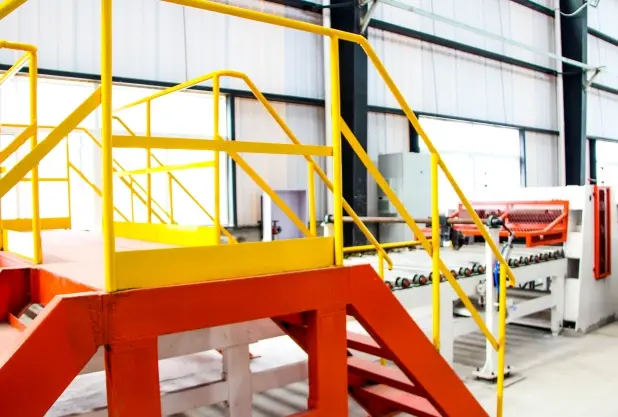
Projecting an accurate payback timeline requires analyzing gross profit margins against ongoing operational expenses (OpEx). In a continuous manufacturing environment, energy consumption—specifically thermal fuel for the multi-deck dryer and electrical power for fine grinding mills—constitutes the single largest recurring variable expense. Facilities running inefficient legacy equipment risk profit margin compression, which severely extends the time required to recover initial capital investments.
Upgrading to an energy-efficient industrial setup incorporates multi-deck drying kilns equipped with closed-loop heat recovery exchangers and dynamic zonal temperature controls. These systems capture hot exhaust air and recirculate clean thermal energy back into the pre-heating chambers, reducing total fuel consumption by up to 30%. By lowering utility expenses per square meter of finished wallboard, plant operators maximize EBITDA (Earnings Before Interest, Taxes, Depreciation, and Amortization) margins, significantly accelerating the debt amortization process.
In typical commercial scenarios, a well-managed industrial wallboard facility operating at 80% or higher capacity utilization achieves full capital payback within 2.5 to 4.5 years of commercial startup. The exact duration depends on regional market pricing, raw material sourcing costs (such as natural vs. FGD synthetic gypsum), and labor automation levels.
Partnering with an experienced global manufacturer streamlines this financial timeline. Machinery supplied by Hebei Lvjoe Machinery Manufacturing Group Co., Ltd. is engineered for rapid modular assembly, precise laser alignment, and fast cold-to-hot trial commissioning. Minimizing the mechanical installation timeframe brings the plant to full commercial capacity months ahead of schedule, generating immediate revenue streams that directly shorten the investment payback period and deliver long-term commercial profitability.
Under optimal market conditions and high capacity utilization, a commercial facility typically achieves full investment payback within 2.5 to 4.5 years post-commissioning.
Advanced heat-recovery drying kilns reduce thermal fuel consumption by up to 30%, directly lowering utility OpEx per board and boosting gross profit margins to accelerate payback.
We engineer long-lifespan, heavy-duty equipment with wear-resistant components, ensuring high equipment reliability, lower annual maintenance overheads, and strong asset value retention.
Copyright © 2026 Hebei Lvjoe Machinery Manufacturing Group Co., Ltd. All Rights Reserved. privacy-policy

