

Evaluating a full-scale commercial plasterboard production line requires investors to look far beyond the base FOB machinery quotation. In global trade, the real measure of financial investment is the total landed cost, which encompasses overseas freight tariffs, specialized container rentals, insurance premiums, and destination seaport handling charges. For an industrial facility with an annual capacity ranging from 2 million to 50 million square meters, international freight logistics can account for a substantial percentage of the capital outlay. Based on field-tested export protocols implemented across international project sites by Hebei Lvjoe Machinery Manufacturing Group Co., Ltd., implementing a disciplined containerized packing strategy directly optimizes the overall gypsum board making machine price by minimizing non-essential freight volume, eliminating costly flat-rack surcharges, and preventing ocean transit damages.
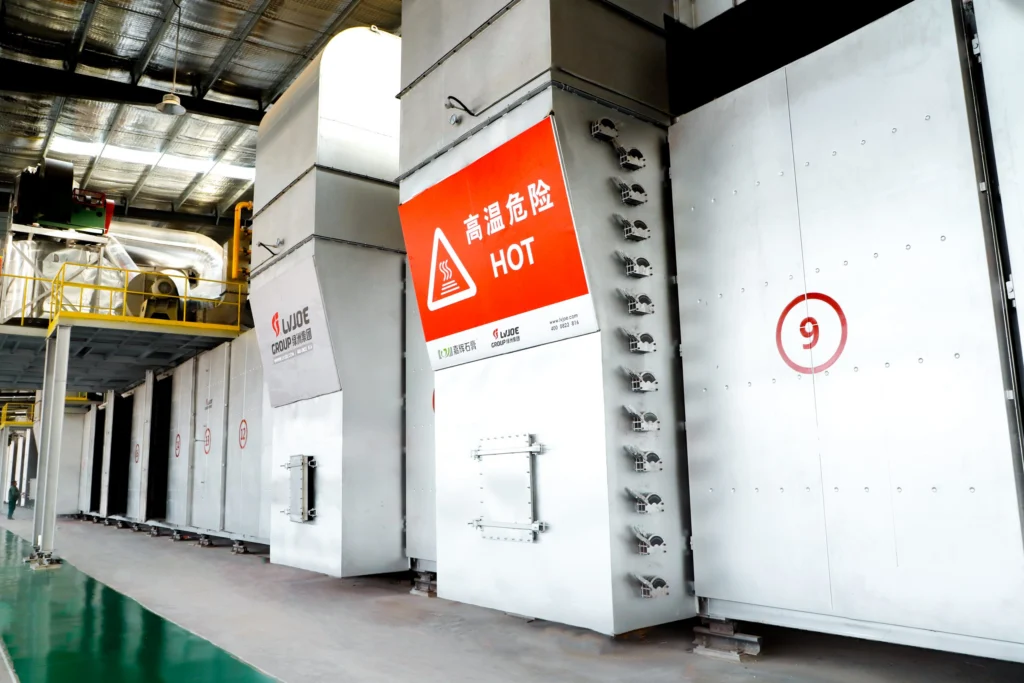
Minimizing total maritime freight expenses relies heavily on intelligent volumetric engineering and strategic container allocation. Industrial plasterboard equipment consists of diverse components, ranging from standardized drive motors, control electronics, and stainless steel pipe networks to massive board cutting saws and multi-deck drying kiln frames. Stowing these items indiscriminately into oversized flat-rack containers significantly increases overall shipping expenditures due to out-of-gauge tariff penalties.
Engineers at Hebei Lvjoe Machinery Manufacturing Group Co., Ltd. utilize advanced 3D load-planning software to pre-calculate the spatial geometry and mass distribution of every production module. Standardized electrical cabinets, servo drive mechanisms, forming stations, and small hardware components are securely packed inside ISPM 15 heat-treated wooden crates and loaded into standard 40-foot High Cube (40HC) closed containers. By maximizing cubic fill capacity in standard closed containers and reserving specialized 40-foot Open Top (OT) or 40-foot Flat Rack (FR) units strictly for oversized structural sections, factory teams significantly reduce total container counts and overall transit charges. To explore our comprehensive range of commercial plant machinery, review our core gypsum board making machine price technology catalog.
Freight optimization extends beyond volume reduction; protecting capital assets from ocean salt spray, ambient humidity, and dynamic vessel motion is equally vital for preserving overall investment value. Arrival of damaged machinery components or corroded electronic modules leads to expensive site downtime, emergency replacement shipping, and costly installation delays. Protecting precision machining tolerances, roller shaft alignments, and sensitive electrical components across weeks at sea requires a multi-tiered protective packaging methodology.
Machined steel surfaces, such as edge-forming roller journals, drive gears, and bearing housings, are coated with industrial-grade Vapor Corrosion Inhibitor (VCI) compounds that form an active molecular protective barrier preventing surface oxidation. Delicate DCS automation cabinets, PLC modules, and operator touchscreens undergo hermetic vacuum preservation. Technicians seal these instruments inside heavy-duty, moisture-proof aluminum foil barrier bags loaded with active industrial silica desiccants before anchoring them into fumigated timber crates. Heavy mechanical gearboxes and hydraulic power units are bolted directly onto steel transport skids to eliminate axial shifting caused by dynamic vessel roll and pitch, guaranteeing that every component arrives at destination seaports in pristine factory condition.
Navigating international trade regulations and destination customs clearance protocols requires absolute documentation accuracy and proactive risk management. Inconsistencies between physical cargo manifests and customs filings can trigger mandatory customs holds, expensive port storage surcharges, and costly project installation delays. Project managers compile comprehensive shipping dossiers, including itemized commercial invoices, certified bills of lading (B/L), certificates of origin, and detailed packing lists specifying net weight, gross weight, exterior dimensions, and HS codes for every component.
Securing full Institute Cargo Clauses (A) all-risk ocean freight insurance provides essential financial protection, safeguarding multi-million-dollar capital assets against transit damage, general average contributions, or total loss during maritime transit. Conducting pre-departure documentation audits streamlines destination customs clearance, facilitating rapid port release so heavy transport vehicles can transfer cargo directly from seaport terminals to the civil construction site.
The final phase of a well-executed logistics strategy transitions cargo from ocean transit to inland heavy haulage, site offloading, and final mechanical assembly. Disembarking heavy Flat Rack and Open Top units at destination seaports requires certified mobile crane operators, specialized heavy-lift rigging crews, and multi-axle low-boy trailers designed for concentrated weight distribution across regional road networks. Technical specialists from Hebei Lvjoe Machinery Manufacturing Group Co., Ltd. provide local logistics contractors with detailed rigging schematics, lifting lug coordinates, and clear center-of-gravity markers for every heavy crate.
On-site engineers guide the positioning, foundation anchoring, and precision laser alignment of core processing modules. Once mechanical assembly is complete, field technicians oversee electrical wiring, sensor calibration, and DCS automated control integration, culminating in comprehensive trial runs and hot commissioning. This disciplined, end-to-end maritime freight execution minimizes site setup timelines, allowing commercial plasterboard producers to achieve full operational throughput quickly and safely.
Our complete plasterboard manufacturing lines support annual output capacities ranging from 2 million to 50 million square meters per year, tailored to specific market requirements.
By using 3D loading software to maximize space inside standard 40HC closed containers and minimizing costly flat-rack usage, ocean freight tariffs and total landed equipment costs are significantly reduced.
PLC control cabinets and electronic instruments are enclosed inside vacuum-sealed aluminum foil barrier bags loaded with active silica desiccants, then anchored inside ISPM 15 heat-treated wooden crates.
Copyright © 2026 Hebei Lvjoe Machinery Manufacturing Group Co., Ltd. All Rights Reserved. privacy-policy

