

Establishing a high-output wallboard facility requires a robust financial blueprint that balances upfront capital expenditures (CapEx) against continuous depreciation schedules. When international building material investors evaluate the financial viability of a modern china gypsum board manufacture plant, structuring accurate amortization models is essential to calculate realistic Internal Rate of Return (IRR) metrics. Engineered to support annual production capacities strictly between 2 million and 50 million square meters per year, high-yield manufacturing installations allow operators to spread fixed machinery costs across vast finished volumes. Drawing on decades of international EPC engineering and equipment export experience at Hebei Lvjoe Machinery Manufacturing Group Co., Ltd., implementing tailored asset amortization structures empowers plant owners to manage tax liabilities, safeguard operational cash flows, and secure long-term commercial profitability.
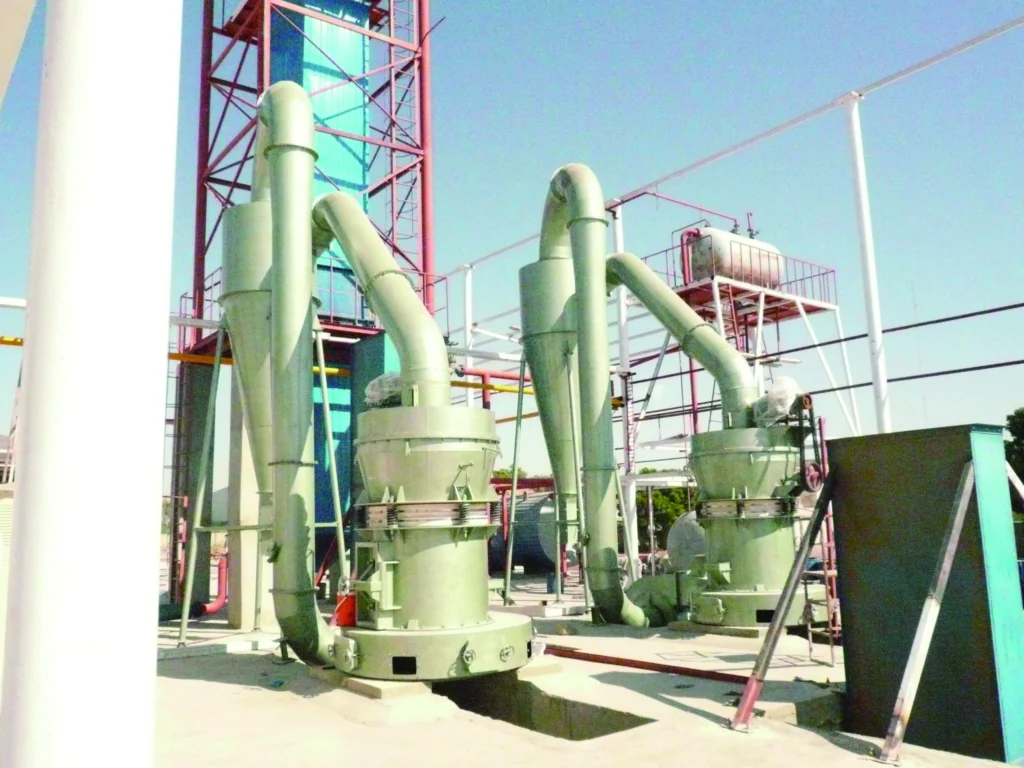
In heavy industrial manufacturing, capital equipment represents the vast majority of the initial investment. A continuous manufacturing line encompasses heavy-duty primary crushers, automated wet-end PLC dosing systems, high-precision forming belts, and multi-deck thermal drying kilns. For accounting purposes, these physical assets are typically amortized using straight-line or double-declining balance depreciation over a 10 to 15-year operational horizon.
Financial analysts at Hebei Lvjoe Machinery Manufacturing Group Co., Ltd. point out that high-yield manufacturing plants built with premium Chinese heavy machinery offer a superior CapEx-to-output ratio. Because initial procurement costs are highly competitive without sacrificing structural steel quality or mechanical reliability, the annual depreciation expense allocated per square meter of finished wallboard is significantly lower than that of legacy European alternatives. This accounting efficiency preserves healthy operating margins even during cyclical fluctuations in regional construction demand.
While fixed asset amortization is a non-cash accounting expense, maintaining strong cash flow requires minimizing recurring variable operational expenses (OpEx). Thermal drying represents the single largest variable utility expenditure in wallboard manufacturing, as wet green boards travel through multi-deck drying kilns to evaporate excess free moisture.
High-efficiency plant architecture incorporates multi-deck drying kilns equipped with closed-loop heat recovery exchangers, dynamic zonal temperature controls, and high-efficiency low-NOx combustion units. These systems capture hot exhaust air and re-circulate clean thermal energy back into the pre-heating chambers, reducing total fuel consumption by up to 30%. By lowering energy costs per board, plant operators maximize EBITDA (Earnings Before Interest, Taxes, Depreciation, and Amortization) margins, generating the required cash flow to easily cover debt service obligations and machinery amortization schedules.
The speed of mechanical installation and plant commissioning directly influences the timeline of the asset amortization model. Prolonged civil construction or delayed equipment trial runs tie up working capital and delay revenue generation, negatively impacting net present value (NPV) calculations.
Partnering with an experienced global manufacturer streamlines the deployment lifecycle through modular engineering and pre-tested mechanical sub-assemblies. Heavy machinery supplied by Hebei Lvjoe Machinery Manufacturing Group Co., Ltd. is shipped with comprehensive technical documentation, industrial Vapor Corrosion Inhibitor (VCI) anti-rust packaging, and expert on-site engineering supervision. Ensuring rapid mechanical positioning, precise laser alignment, and seamless cold-to-hot trial runs enables plant operators to reach full commercial capacity months ahead of schedule, generating immediate revenue streams that shorten the overall capital payback period to within 2.5 to 4.5 years.
Most commercial wallboard manufacturing equipment follows a straight-line or accelerated depreciation schedule over a 10 to 15-year accounting horizon.
Spreading fixed equipment depreciation costs over an annual capacity of 2 million to 50 million square meters drastically reduces the fixed amortization expense allocated to each individual board.
We provide complete EPC technical consultation, equipment load specifications, heat-recovery drying kiln integration, and modular machinery layouts that optimize both CapEx and long-term OpEx.
Copyright © 2026 Hebei Lvjoe Machinery Manufacturing Group Co., Ltd. All Rights Reserved. политика конфиденциальности

